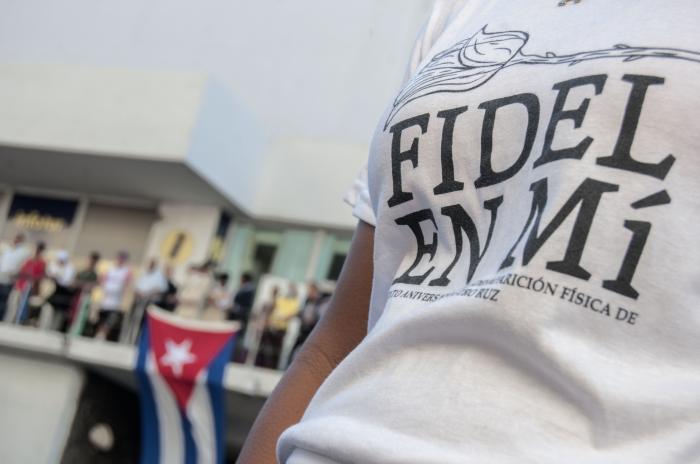
In a global scenario marked by deep crises, wars of dispossession and persistent inequalities, and especially when the Homeland faces colossal challenges, the figure of Fidel Castro Ruz resurfaces as a current antidote for the difficult times humanity is going through. On this date when we remember his birth, the legacy of the Commander-in-Chief remains more alive than ever, offering a beacon of hope and an ethical compass to navigate the storm.
For Fidel, difficult times were not an excuse for paralysis, but the crucible in which true revolutionaries are forged. He himself declared that «in difficult times the number of waverers increases,» but it is also when «men and women are truly tested» and greater effort, courage, heroism, intelligence, efficient organisation, as well as an unshakeable morale, are required. Far from being a call to blind stubbornness, this perspective is an invitation to conscious and organised action, to turn adversities into struggle and victory.
The enduring relevance of his thought is anchored in a profound humanism and a firm anti-imperialist conviction. Fidel dreamed of a world where «the philosophy of dispossession disappears and the philosophy of war will have disappeared,» advocating for the end of the exploitation of countries by monopolies as a condition for achieving a «true stage of progress.» This ideology, centred on social justice and the full dignity of the human being, gains renewed strength in a context where solidarity, unity and internationalism are principles that today are more necessary than ever.
Cuba, under the siege of an intensified economic blockade that has been maintained for more than six decades, embodies the resistance that Fidel preached. The example of its people, who face the worst coercive measures with unshakeable fierceness and courage, is living testimony that no imperialist plan, economic pressure or media manipulation can tarnish the wealth of ideas that Fidel left us. The Island, which has known how to turn its drama into dignity, demonstrates that resistance is not only possible, but also the path to victory.
Fidel’s call transcends the borders of the archipelago and projects itself as a warning and a guide for the world. It is not, as he himself pointed out, a question of how much longer Cuba will resist, but of questioning how much longer humanity will endure a course that seems headed for self-destruction. His legacy confronts us with the need to build a different future, in which the guide of politics is, unwaveringly, human well-being and where dignity, always collective, is the standard of struggle.
In short, in times of uncertainty and global challenges, turning to Fidel is not an act of nostalgia, but an operation of political and ethical survival. His thought, forged in adversity and struggle, stands as an antidote against discouragement and resignation, reminding us that history is not written and that it is always possible to conceive the noblest ideas and give life for what one feels and thinks. That is the perennial lesson of a man who, even in the face of the impossible, always bet on victory.