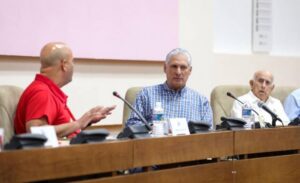
At the meeting of the Government Commission for Attention to Demographic Dynamics (CGADD), chaired by Prime Minister Manuel Marrero Cruz, Ciego de Ávila appeared among the territories with situations to resolve in several indicators of the Maternal and Child Health Programme.
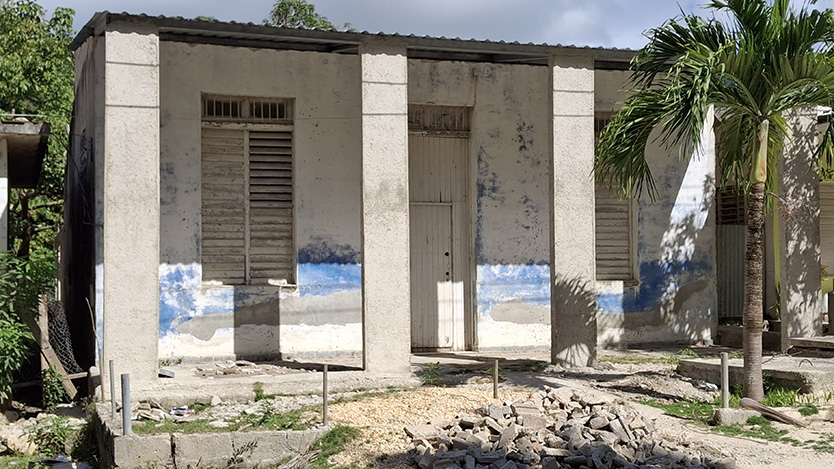
The province has 10 municipalities and 11 maternity homes, but three municipalities still lack this institution. Florencia has achieved only 20 per cent construction progress; Primero de Enero, 60 per cent; and Bolivia has the premises defined but has not yet begun the process. In all three cases, as a temporary variant, pregnant women are admitted to polyclinic hospital wards. Additionally, two existing homes have structural problems.
Of the 1,393 registered pregnant women in the province, 351 — 25.2 per cent — have some nutritional issue: 128 undernourished at initial assessment, 88 with anaemia and 135 with insufficient weight gain. This percentage places Ciego de Ávila above the national average of 22.5 per cent, along with Santiago de Cuba, Granma and Guantánamo.
Among children under one year, the situation also raises alarm: of 2,807 infants, 125 — 4.5 per cent — have nutritional problems, placing the province as the third in the country in this indicator, surpassed only by Granma and Santiago de Cuba. Of these, 260 have associated social risk.
Weekly diet assessment confirms that Ciego de Ávila is among the provinces with the highest number of municipalities that do not guarantee the delivery of all the products stipulated in diet 06.02. The report indicates that food difficulties affect all municipalities in the territory.
As of 6 June, 31 pregnant women in the province lack a cot and 16 lack a mattress, while among infants there are three without a cot and one without a mattress. The deficit of adult scales in family doctor and nurse surgeries amounts to 137 units in the province, with no immediate replacement possibilities as these are imported equipment.
Regarding the baby layette, the municipality of Morón appears among the prioritised territories nationally for resource allocation.
Of the cases referred to the Commissions for Attention to Social Policies, Ciego de Ávila maintains 29 pregnant women and two infants pending resolution. Additionally, 48 pregnant women, 10 infants and two children residing in the territory without a registered home address do not receive the benefits of the diet, layette, cot or mattress; a situation the provincial government is working on with the Commerce directorates to resolve.
The province also reports 10 pregnant teenagers aged 15 or under — including Ciego de Ávila among the provinces with this active data — who refuse to enter maternity homes, a case that must be addressed through the social policies commissions and in application of the Family Code, and the Code for Children, Adolescents and Youth.
Within the framework of the National System for Comprehensive Life Care, Ciego de Ávila is among the territories that have advanced in training people in reserve for the Home Social Assistance Service, together with Havana, Cienfuegos, Sancti Spíritus, Holguín, Granma and Santiago de Cuba, reporting 456 people in training jointly among these provinces.