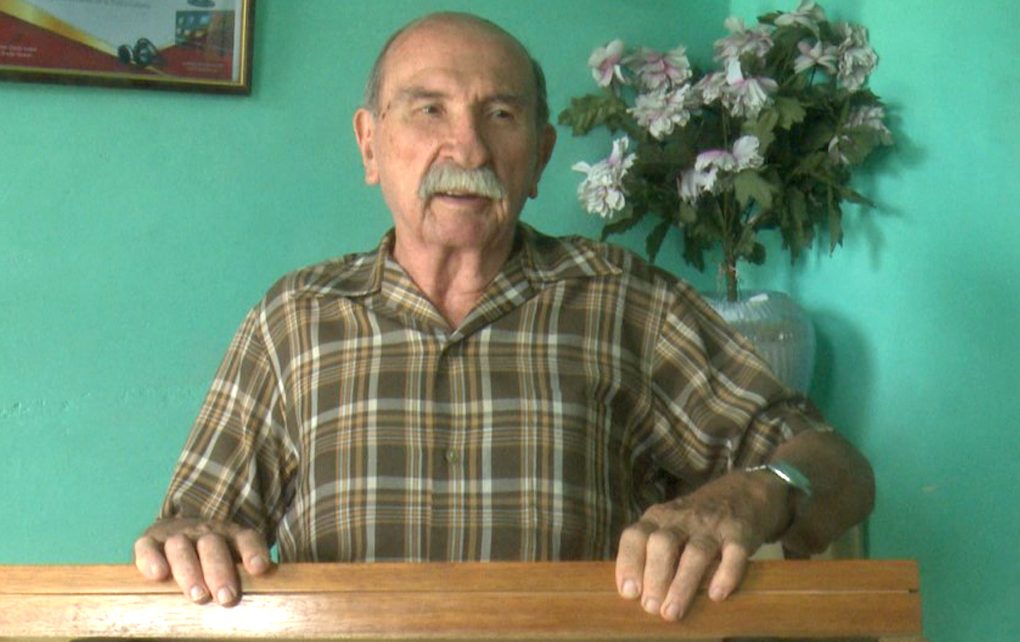
There are memories that do not need photographs. Sometimes, a voice is enough. At Radio Surco, the voice of Alberto Octavio Pardo Companioni is still part of the station’s sound landscape. It is in the station identification of the main plant, travels through the airwaves and reaches those who once heard it.
And then one understands that there are people who, even after departing, find a way to stay. Pardo found his in radio.
There he spent a good part of his life. There he built a career that made him one of the most recognisable voices in Avilanian broadcasting. There he was an announcer, a teacher, a colleague and, for several generations, a professional reference.
He died in Ciego de Ávila on 13 January 2025, at the age of 84.
But death could not erase his voice. Nor could it erase the mark of that man who made simplicity a form of greatness.
Pardo was a professional of recognised trajectory. He took part in numerous radio festivals as a delegate and received multiple awards. Among them were the Raúl Gómez García Medal, the Centenary Seals, the Radio Microphone and the Distinction for National Culture.
He was distinguished as Artist of Merit and Master of Radio Broadcasters, and in 2020 received one of the greatest recognitions for a lifetime of dedication: the National Radio Prize.
However, those who knew him tend to remember him for something that does not appear on any diploma: his humility.
He was a cultured, well-prepared man of enormous experience, but approachable. He never needed to show off what he knew. His professional greatness coexisted with a simplicity that those who worked alongside him still remember.
For Déborah Chinea González, sharing microphones with him was an experience that marked her career.
Pardo taught her technique, expression and radio discipline. But he also left her something more difficult to learn in a school: love and respect for the craft.
Déborah was close to him during Pardo’s final days. That is why Déborah’s memories of Pardo carry the emotion of someone speaking of a teacher, but also of someone beloved.
Perhaps that is the best way to measure the mark of a radio broadcaster: not only by what he did in front of the microphone, but by everything he left in those who once worked alongside him.
Pardo left a great deal. He left knowledge. He left stories. He left disciples. He left affections.