Army General Raúl Castro, leader at the forefront of the Cuban Revolution, has endorsed the transformation proposals presented today at the Extraordinary Plenum of the Communist Party of Cuba (PCC) Central Committee.
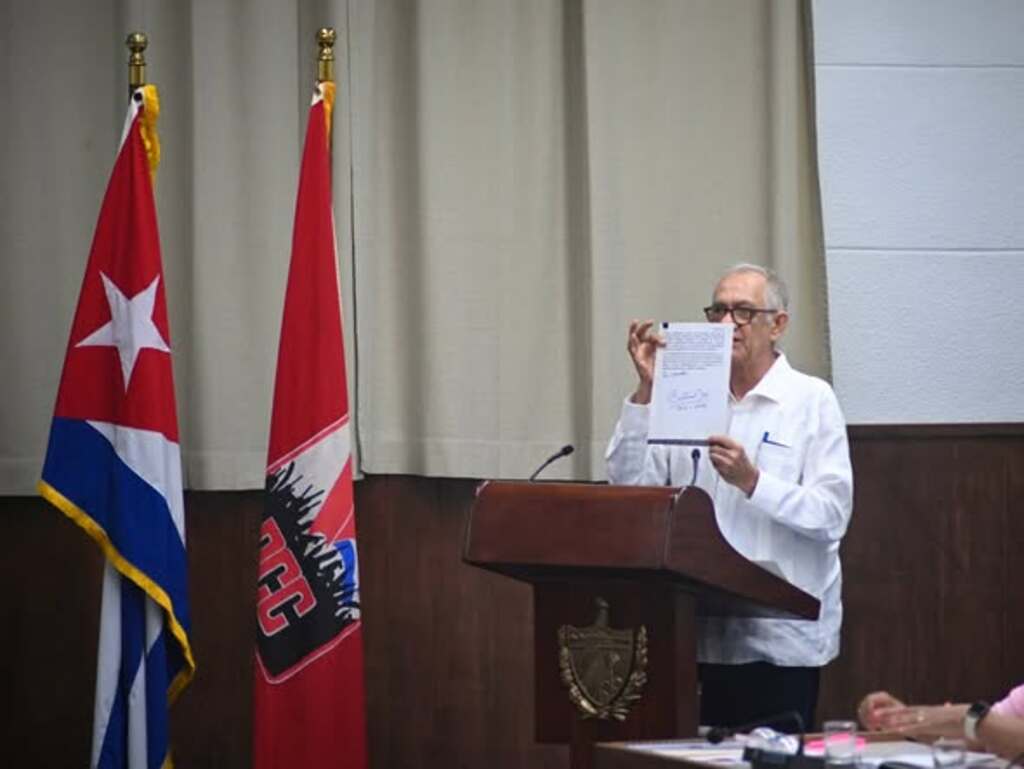
At the meeting this Wednesday, which began in the afternoon with the presence of the PCC First Secretary and President of the Republic, Miguel Díaz-Canel, Politburo member José Amado Ricardo Guerra reported that Raúl had been consulted and was in full agreement with the proposals.
The Divisional General and Secretary of the Council of Ministers expressed that the Cuban leader, who is participating in the meeting via videoconference, «is convinced that from collective analysis and even from disagreements, the best ideas always emerge.»
Raúl called for participation in this most important meeting, in the interest of enriching its content and building the necessary consensus at this transcendental moment, to undertake the proposed transformations: «It is what best suits the Revolution today,» he affirmed.
Ricardo Guerra underscored that the Army General alerts us that, as important as or more important than the approval of these transformations, is «their proper and timely implementation,» with well-defined priorities and the conscious participation of all our people.
This demands, as he has said on other occasions, acting with «feet and ears on the ground,» taking very much into account the opinions and concerns of the population, he emphasised.
In the opinion of the Secretary of the Council of Ministers, a strength of this process is that the leader at the forefront of the Revolution, alongside Fidel Castro, an exceptional protagonist of this great revolutionary work, has endorsed the proposal presented.
The PCC Extraordinary Plenum is today analysing the proposals for profound transformations announced by Cuba’s Head of State, which will be debated tomorrow in an extraordinary session of the National Assembly (parliament).
Among the changes announced by Díaz-Canel are the elimination of the obligation to carry out import and export operations through state-owned enterprises, which would allow more direct participation by economic actors.
Tariff incentives are planned for the import of raw materials intended for national production, along with a reorganisation of logistics chains to favour exports and foreign currency earnings; greater autonomy for state enterprises, which could define their own wage systems and expand their commercial powers.
Likewise, the proposals grant municipalities greater powers to manage foreign currency, authorise businesses and participate directly in foreign trade activities, while an institutional reform is being promoted that would reduce the number of ministries from 27 to 21.