As part of the measures adopted by the Ministry of Transport to guarantee the continuity of services in the face of the fuel limitations facing the country, a new procedure for the allocation of tickets on national bus and railway services has come into force in the province of Ciego de Ávila, based on a priority system and managed through municipal commissions.
Manuel Lorenzo Álvarez, Deputy Director of the Provincial Transport Delegation in Ciego de Ávila, explained that people needing to travel should go to the offices set up at the government directorates of each municipality to submit their request, which will be evaluated by the commissions created for that purpose.
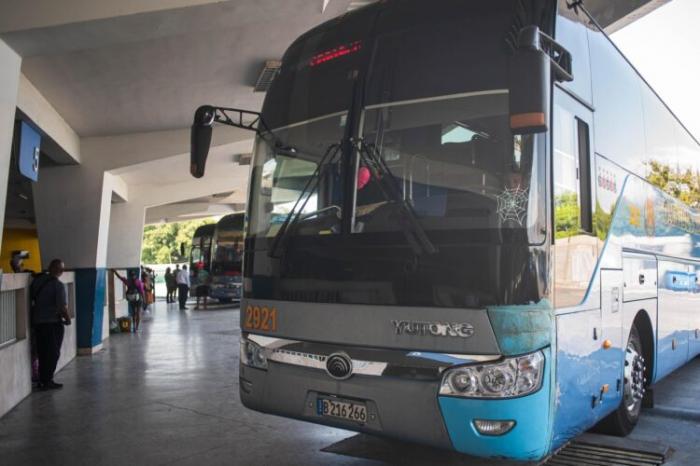
In the case of national bus transport, departures from the Ciego de Ávila Terminal will take place on Sundays, Tuesdays and Thursdays at 11:40 p.m.
The distribution of capacities, approved by the Provincial Commission, allocates seats among the municipalities according to population and demand: ten seats to the provincial capital, seven to Morón, four to Chambas and two to each of the remaining territories.
Ticket allocation will follow an order of priorities established by the Ministry of Transport, which includes: first-degree relatives of deceased persons, prisoners on leave or licence, passengers with international air connections, seafarers in the process of signing on or signing off, persons with appointments at embassies and consulates, as well as patients with medical appointments or discharges in provinces where no Medibus service exists.
In this regard, he added that the transport of medical appointments to Havana on Sundays and Tuesdays continues, as well as departures from Monday to Friday for medical appointments and oncology services to the province of Camagüey, cases which are handled through Public Health services.
Interested parties must submit their request seven days in advance of the planned travel date and, once approved, present themselves three hours before the bus departure to formalise the purchase of the ticket at the terminal.
Regarding the railway service, Lorenzo Álvarez informed that passengers must also submit their request at the municipal transport offices.
National trains will maintain their circulation with an approximate frequency of 16 days per itinerary; however, due to Ciego de Ávila’s geographical position, the province will receive a train passing through every three or four days.
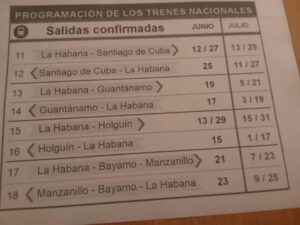
Among the services that will continue operating are the Havana-Santiago de Cuba, Havana-Guantánamo, Havana-Holguín and Havana-Bayamo-Manzanillo trains, with the latter having no return capacity for passengers from Bayamo-Manzanillo to Ciego de Ávila.
Authorities specified that passengers with confirmed reservations must present themselves four hours before the train departure to validate their travel and purchase the ticket at the railway terminal.
The official also reported that, as part of the new organisation, the Viajando application and the waiting list system for national bus and railway services have been discontinued, replaced by the current allocation mechanism through municipal commissions.
Lorenzo Álvarez clarified that these measures do not restrict population mobility, but exclusively regulate the allocation of capacities on state passenger transport by bus and railway due to fuel availability; citizens continue to have the possibility of travelling by other means of transport.
Regarding people with special conditions, pregnant women, and similar cases, the official clarified that priority is determined by the reason for travel, not by their condition itself.
Likewise, he explained that returns to the province of origin must be arranged in the municipality where they are, through the offices created for these purposes, upon presentation of the identity card to verify the applicant’s address.
In the event of any disagreement regarding the issuance of tickets, users must first submit their complaint to the relevant municipal commission. If dissatisfaction persists, they may go to the Provincial Transport Group, located on José María Gramonte Street, between Libertad and Independencia, in the city of Ciego de Ávila.
Authorities reiterated that the new procedure aims to guarantee a more equitable distribution of available capacities, prioritising the most urgent cases while the country’s current energy conditions persist.