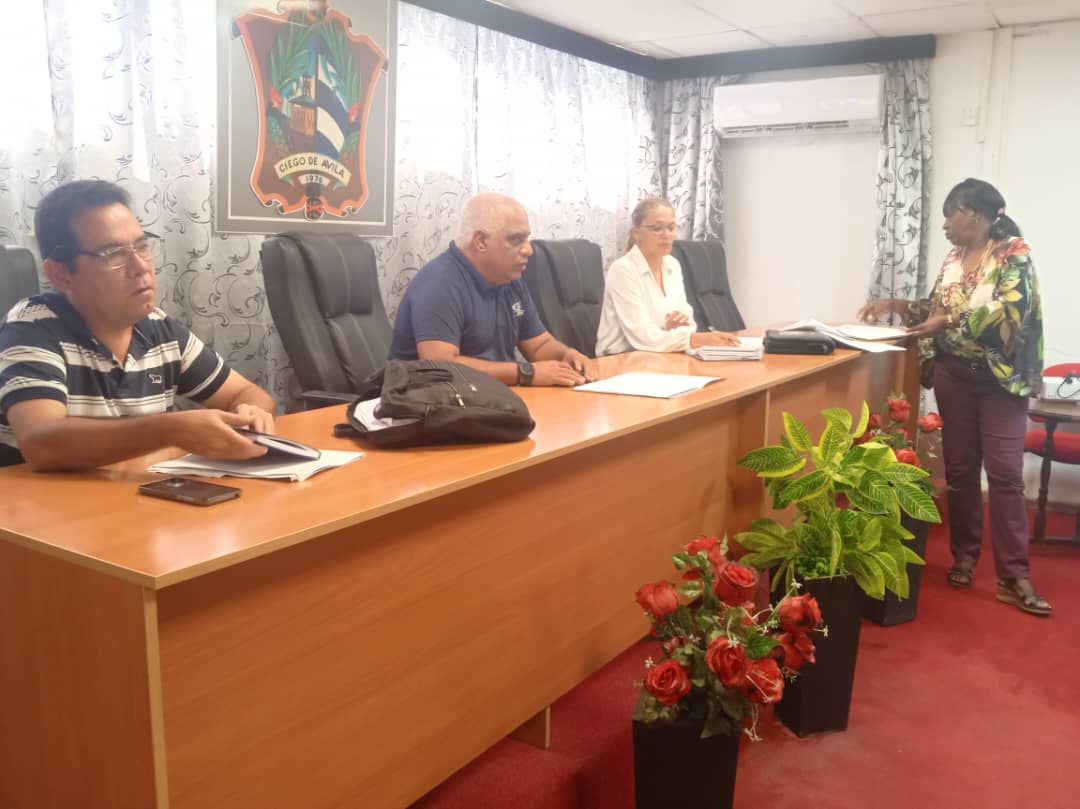
With the presence of Luis Ladrón de Guevara, Deputy Minister of Transport, and sector directors from across the country, a proposed procedure for reservations in national passenger transport services was analysed in Ciego de Ávila.
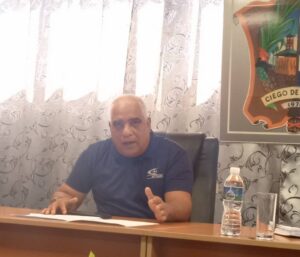
During the exchange, the Deputy Minister explained that a working group from the Ministry of Transport is touring the country to verify how the inter-provincial passenger marketing and transport system will be implemented, taking into account the characteristics of each territory.
Ladrón de Guevara clarified that there is no limitation on population mobility, although a considerable reduction in available capacity on national bus and rail routes is anticipated.
«People can travel whenever they need to. What will happen is a reduction in the capacities offered by national passenger routes,» the Deputy Minister noted.
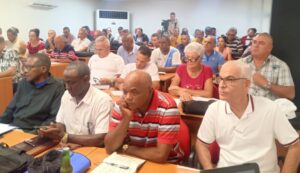
In the case of Ciego de Ávila, the creation of a working group was instructed, tasked with implementing, adjusting and adapting the measures to the province’s specific conditions. For this, the capacities allocated to the territory and the number of weekly journeys available will be taken into account.
The Deputy Minister clarified that these measures do not affect Medibus services or those linked to health, which are maintained and strengthened due to their high social sensitivity.
As part of the Ministry of Transport’s actions in the province, work is also underway to strengthen other essential services. Among these, he mentioned the incorporation of funeral vehicles, electric transport for patient care, and tricycles, as well as progress in changing the energy matrix of the transport system.
In that regard, he highlighted the preparation of terminals to have solar panels, so that processes such as passenger check-in do not represent an additional burden on the electro-energy system of the municipalities and the province.
Regarding the marketing of available capacities, Ladrón de Guevara explained that inter-provincial transport will continue to be carried out through national services, albeit with a reduced number of departures.
Capacities will not be marketed through the APK or directly at agencies, but will be allocated by the corresponding working group. Their sale will then be carried out through the Viajero Company, at its agencies and offices, as has been done traditionally.
For rail transport, it is anticipated that one national train will pass through Ciego de Ávila every two days, in both directions, with capacities allocated for the province.
It was also reported that the territory will have the ability to travel to the Isle of Youth, a possibility that until now did not exist directly for Avilanians with that need.
The procedure will give priority to sensitive and urgent cases, such as medical appointments, surgical interventions, health tourism, family bereavements, and other social situations requiring differentiated attention.
The Deputy Minister reaffirmed the Ministry of Transport’s confidence in the work being done by the province and recognised the results of the sector’s delegation in Ciego de Ávila.
He also called for continued improvement in transport organisation from the municipalities, where many of the population’s mobility needs originate.
Sector authorities reiterated that the main objective is to organise available capacities, prioritise the most sensitive cases, and maintain the stability of passenger transport amidst current limitations.