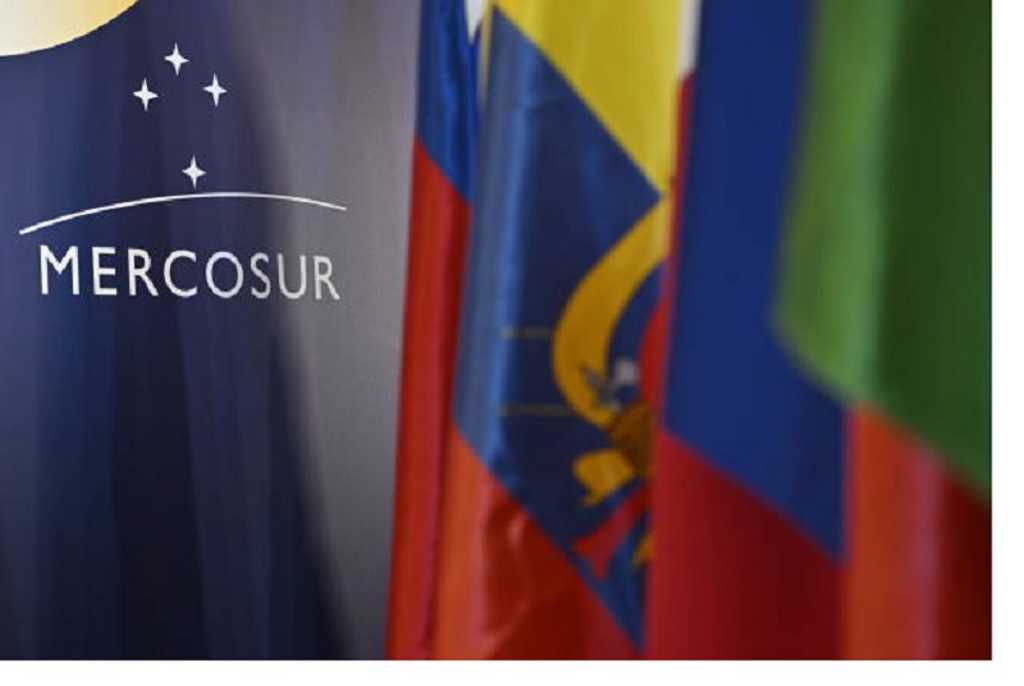
The Foreign Ministers of the Southern Common Market (Mercosur) will have a key meeting today to define the course of the bloc following another delay announced by the European Union (EU) in signing the trade agreement.
Tomorrow in Foz de Iguazú, a city in the south of the country, Argentina, Brazil, Paraguay and Uruguay were scheduled to seal the treaty during the Mercosur Summit.
However, a lack of internal consensus among the European nations led Brussels to postpone the decision until January, generating discontent among the South American governments, who consider the negotiation process begun almost three decades ago to be exhausted.
Warnings from Mercosur were not long in coming. Both Brazil, which is leaving the bloc’s pro tempore presidency, and Paraguay, which will assume it this Saturday, made clear that a further delay could mean the definitive closure of dialogue with the EU.
The Brazilian Foreign Minister, Mauro Vieira, maintained that, should the agreement not materialise, the bloc will redirect its efforts towards other strategic markets.
Among the mentioned alternatives are Canada, the United Kingdom, Japan and several Asian countries, in addition to partners seeking to update existing agreements, such as India.
For its part, the EU ruled out voting on the approval of the treaty within the initially foreseen deadlines and granted Italy more time to analyse its internal impact.
The opposition of France and the reservations raised by Rome prevent, for now, reaching the qualified majority necessary to endorse the pact.
In a direct conversation with the Brazilian President, Luiz Inácio Lula da Silva, the Italian Prime Minister, Giorgia Meloni, expressed her willingness to sign the agreement, but requested an additional period to address the demands of her country’s agricultural sector, one of the main focuses of resistance.
Lula confirmed he will convey this request to the Mercosur partners during the summit.
Beyond the agreement with the EU, the bloc’s agenda includes sensitive debates. One of them is whether to accept or not the safeguards recently approved by Europe, which seek to limit an abrupt increase in South American agricultural imports. Brazil has already expressed concern about these measures.
On economic matters, the status of trade negotiations with other countries and blocs will be reviewed, as well as the possible definitive incorporation of the automotive and sugar sectors into the common external tariff, currently excluded.
Finally, on the agenda is the renewal of the Mercosur Structural Convergence Fund, a key instrument for reducing internal inequalities which has financed dozens of projects for nearly one billion dollars, as well as assessing the inclusion of Bolivia in this mechanism.