Boosting food production continues to be one of the main priorities for strengthening food autonomy in the territories.
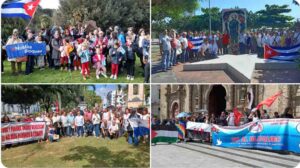
In this regard, workers and representatives of various organisations in Ciego de Ávila took part this Sunday in a voluntary work session at the El Jiquí organoponic garden, belonging to the Roberto Rivas Fraga popular council, with the aim of supporting agricultural tasks and contributing to the community’s supply.
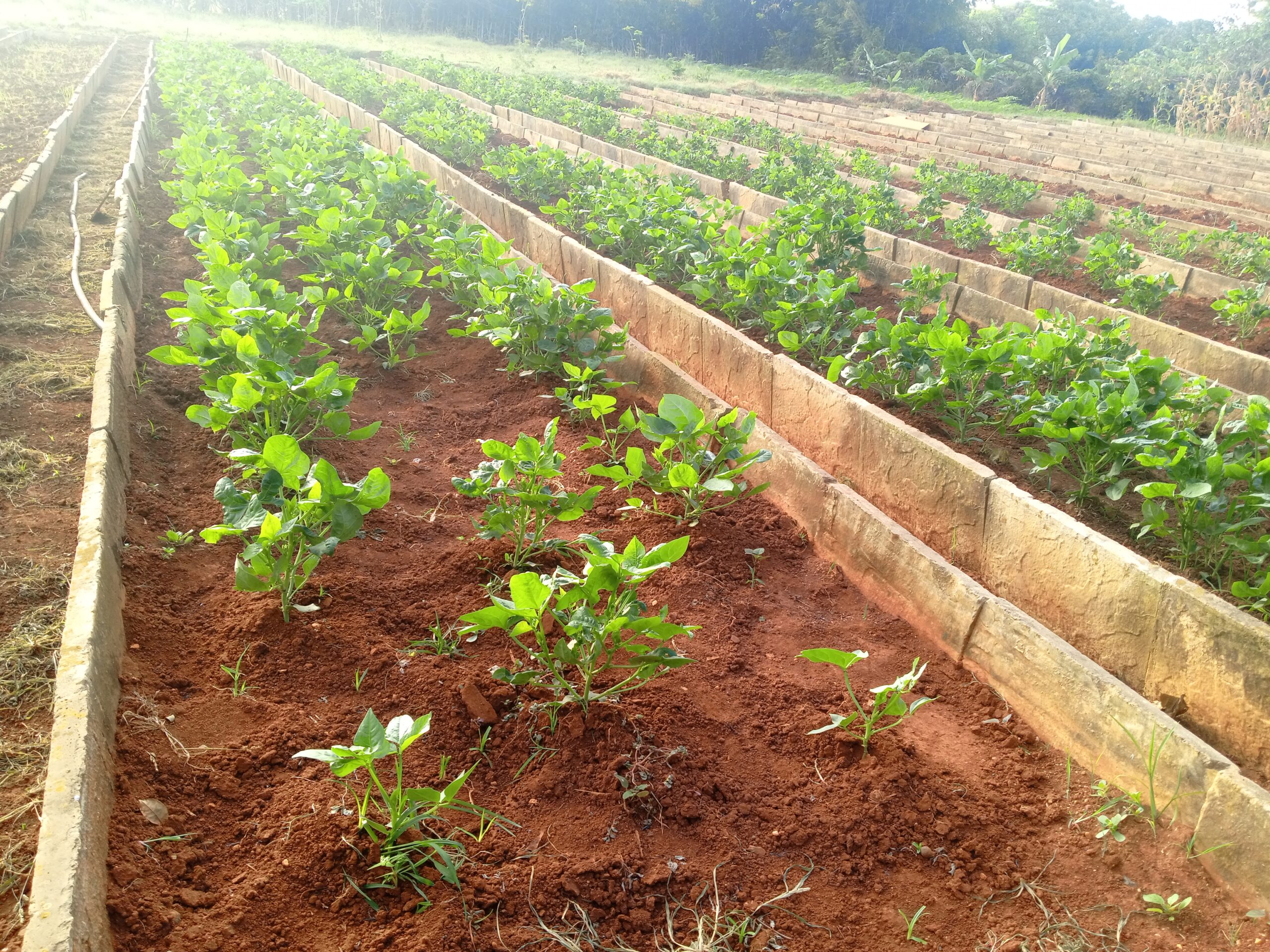
During the activity, Nayara Ramírez Montalvo, administrator of the organoponic garden, explained that the production unit currently has a diversity of crops that contribute to the supply of fresh food for the population.
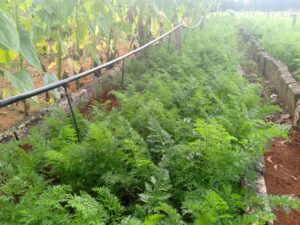
According to her details, the area cultivates seven fundamental lines: green beans, beetroot, carrots, beans, leeks and maize, in addition to other products such as plantain, banana, cassava and pumpkin. They also have sunflower plantings, which diversifies the site’s production.
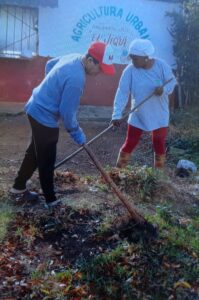
Ramírez Montalvo highlighted that the voluntary work session represents significant support for the organoponic garden’s workers. She explained that this type of initiative allows for strengthening the link between institutions and those who work the land directly.
«It’s a great help, because it’s always good for the government to engage with us here at work. There are really few people who want to work the land,» she noted.
The administrator also specified that the organoponic garden has already been producing for the community since last year, when they began the planting cycle for cool-season crops, including lettuce and other long-cycle products. They are currently developing short-cycle crops, which allows them to sustainably maintain production destined for the population.
For his part, Pedro Luis Alfonso Mora, president of ANAP, explained that these sessions are part of the work system developed by different organisations in the municipality, where voluntary work is carried out every Sunday of the month with the participation of officials and representatives of institutions.
The leader specified that on the third Sunday of the month, the Committees for the Defence of the Revolution (CDR), ANAP and the Federation of Cuban Women (FMC) participate jointly, with the purpose of supporting productive tasks that have a direct impact on the community.
He added that in recent months, priority has been given to carrying out voluntary work in organoponic gardens, due to fuel limitations that make it difficult to travel to more distant agricultural areas. This alternative allows maintaining the productive nature of the sessions and directly supporting food production in the city.
For his part, Julio César Moreno Quintero, delegate of constituency 47 in this popular council and president of the permanent commission for agri-food work and services at the Municipal Assembly of People’s Power, stressed that these actions are part of the strategy to strengthen sovereignty and food autonomy in each territory.
In this regard, work is being done on the recovery and utilisation of all organoponic gardens in the municipality, promoting that institutions, educational centres, hospitals and other entities have spaces dedicated to food cultivation.
The initiative also responds to the call to cultivate every available space, with the purpose of increasing local production and guaranteeing fresh food for the population.
With actions like this, the municipality is advancing in the strengthening of urban agriculture and in the collective commitment to produce more food, a key element for achieving food self-sufficiency and improving the community’s quality of life.
As a closing to the gathering, a fair was held with the participation of the La Romagnola restaurant, the Collection Company and the La Alimentaria Base Business Unit, who offered different products to the population.