The Centre for Environmental Engineering and Biodiversity of Ciego de Ávila (CIBA-CA), one of the pillars of local science, leads research projects in areas of the Great Northern Wetland of Ciego de Ávila (GHNCA), a prioritised ecosystem recognised as a Ramsar Site for its values of international importance.
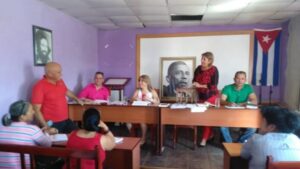
Motivated by the declaration of the Avilanian territory as Outstanding in the national emulation for Cuban Science Day, researchers from CIBA-CA, an institution subordinate to the Environment Agency of the Ministry of Science, Technology and Environment (Citma), shared the main results of scientific work in the GHNCA.
Daylon Fundora Caballero, associate researcher and coordinator of the project Modelling the Bioindicator Character of Reptile Communities for the Health Status of Vegetation Formations in the Centro Oeste Cayo Coco Ecological Reserve, highlighted the characterisation of the fundamental objects of that study.
He added that they established the relationship of climatic and seasonal conditions with reptile communities and the health status of vegetation formations in the Ecological Reserve.
Likewise, they worked to integrate the management of reptile communities and the health and conservation status of terrestrial ecosystems in protected areas.
Oriented towards disaster risk reduction management and adaptation to climate change, the project led by Javier González García, associate researcher and Deputy Director of Research at CIBA-CA, advances in characterising the hazard from intense rains, drought and strong winds.
This research to adopt preventive and adaptation measures is developed in the municipalities of Chambas, Morón, Bolivia, Primero de Enero, Ciro Redondo, Florencia, Ciego de Ávila and Baraguá.
Another important action was the development of a strategic tool for disaster risk reduction and adaptation to climate change.
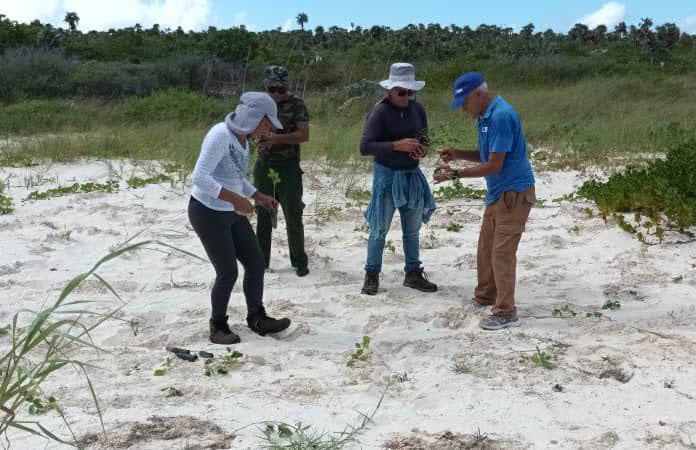
With direct benefits for the development of sun and beach tourism in Jardines del Rey, another research project dedicates efforts to the rehabilitation of coastal dunes.
Marisleys Castro Carrillo, associate researcher and head of the Department of Environmental Bioengineering, referred to the production of 1,523 seedlings of native species, using tube technology and standardised protocols, which allowed the rehabilitation of 637 square metres of dune systems and the control of invasive species.
She added that in the CIBA-CA Environmental Testing Laboratory they developed and characterised biofertilisers obtained from seagrass (sargassum); and updated the disturbance map to identify critical problems in the Larga and Pilar beach sectors.
This project validates protocols for the pre-germinative treatment and reproduction of native coastal dune plants; in addition to determining the cognitive needs in tourism sector workers for the management of the aforementioned ecosystems, with the aim of designing training programmes that incentivise professional competencies and sustainable tourism.
Various food production units in the province of Ciego de Ávila also benefit from a project that promotes the use of native beneficial microorganism technology and other biofertilisers in sunflower crops.
In this particular aspect, the main results stand out as contributing to diversifying crops on lands of agro-industrial and agricultural enterprises, and state and private farms, as a response to the food sovereignty programme.
Increases in yields in sowings of the mentioned oilseed plant are also recorded, and contributions to soil conservation are recognised from the use of agroecological practices, fundamentally associated with the utilisation of various biofertilisers.
Linkages with other scientific centres and universities in the territory enable the strengthening of capacities for better performance in the agricultural sector.