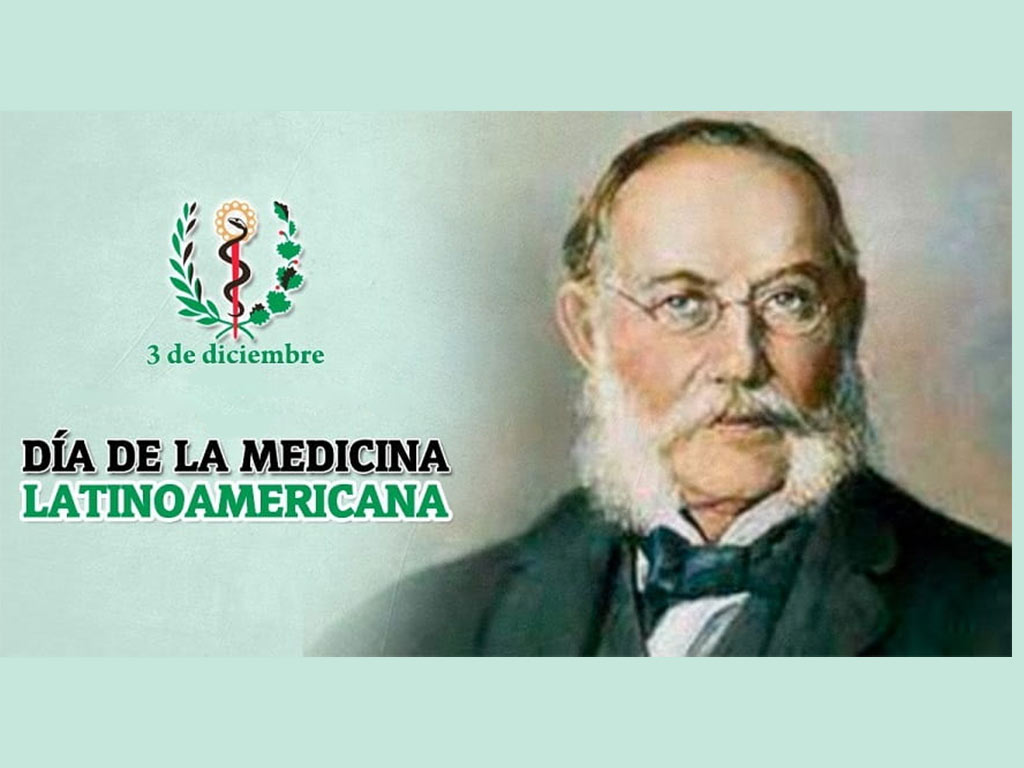
Health professionals and workers celebrate today Latin American Medicine Day, which commemorates the birth in 1883 of the Cuban sage Carlos Juan Finlay, discoverer of the transmitting agent of yellow fever.
Doctor Finlay, the most profound and intense researcher of this disease, concluded that between an infected subject and a healthy one, there was an independent agent that transmitted it, and was able to identify the Aedes aegypti as the biological vector.
His victory was sought to be snatched away by the United States to favour the American Walter Reed.
Despite the manoeuvres to strip the Cuban researcher of his merit, the world scientific community was not deceived and recognised him as the first and only author of the discovery.
This is demonstrated by the numerous awards received, among them the Mary Kingsley medal, the highest prize of the era for research in tropical medicine, in 1907, and the decoration of Officer of the Legion of Honour from the French government, in 1908.
For its part, UNESCO included him among the six greatest microbiologists of all time and since 1980 established the Carlos J. Finlay Prize, as an incentive for microbiological research.
In his honour also, the date of his birth was designated to commemorate Latin American Medicine Day. Currently, the Cuban State awards the Carlos J. Finlay Order to the most relevant scientific works for the welfare of humanity.
To commemorate the date, Cuba develops periods of tribute to Health workers, an occasion on which the main achievements in this sphere are highlighted, among them, advances in the maternal-child programme, the island’s contributions to international medical cooperation, as well as support to other nations in the face of natural disasters and epidemics.