
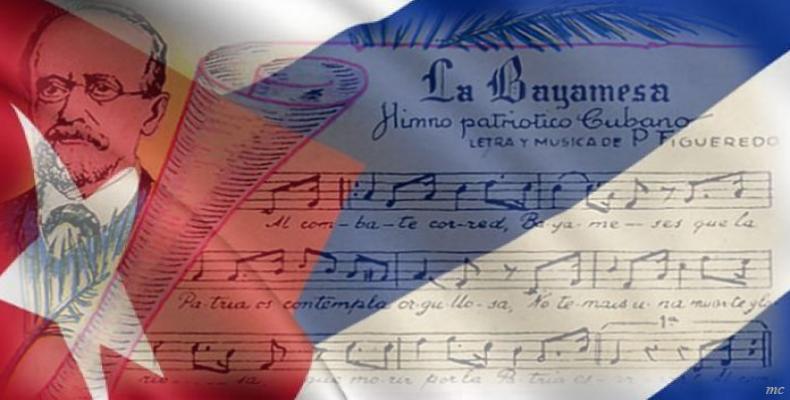
Cuba celebrates today the Day of Cuban Culture with a programme of activities across the entire country, in remembrance of 20 October 1868, when the National Anthem was intoned for the first time in Bayamo, an event which marked the beginning of the commemoration.
Miguel Díaz-Canel Bermúdez, First Secretary of the Central Committee of the Communist Party of Cuba, and President of the Republic of Cuba evoked the significance of the National Anthem on this date from his social media, by highlighting that it constitutes a symbol of identity and resistance, and reiterated that culture is the foundation of the nation and a guarantee of sovereignty.
The Cuban Culture Programme, developed from 10 to 20 October, was dedicated to the centenary of the historical leader of the Cuban Revolution, Commander in Chief, Fidel Castro Ruz and to the 95th anniversary of Armando Hart Dávalos, both considered pillars of revolutionary cultural thought.
The centenaries of Alfredo Guevara, Juana Bacallao, Abelardo Estorino and the Trío Matamoros were also commemorated, as well as the 95th birthdays of Alfredo Sosabravo and Omara Portuondo, and the 40th anniversary of the National Campaign for Reading.
Under the slogan “Culture is the nation”, the programme included concerts, artistic presentations in public spaces, community fairs, heritage tours and meetings with National Prize winners from different art forms.
The Ministry of Culture called for the intoning of the National Anthem in schools, workplaces and communities at eight in the morning, in remembrance of its first performance during the liberation of Bayamo by the independence troops of Carlos Manuel de Céspedes.
According to the Ministry of Culture, the celebration aimed to preserve historical memory, strengthen identity and promote artistic and literary creation across the entire country, with an emphasis on the formation of values in the new generations.
The programme was linked with the Fiesta de la Cubanía, held from 17 to 20 October in Bayamo, Granma, which reaffirms culture as a living heritage, community action and intergenerational dialogue.
Officially established in 1980 by the Council of Ministers, the commemoration is consolidated as one of the most significant moments in the national cultural calendar, by projecting culture as a pillar of the nation and a tool for unity in the face of contemporary challenges.