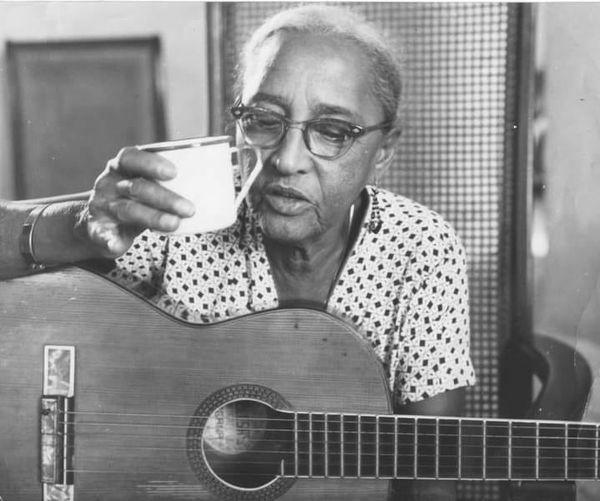
Six decades ago, on the 17th of December 1965, María Teresa Vera passed away.
With profound pride, we honour the memory of a troubadour we immediately identify with the Habanera Veinte años, one of the most beautiful songs in the Cuban repertoire: María Teresa Vera, who is considered the Greatest Trovadora.
However, while it is true that this 1935 song, with music by María Teresa and lyrics by Guillermina Aramburu, is marked by the patina of a charm without equal, it would be extremely unjust to reduce the imprint of her legacy to nothing more than the relevance of this anthological piece.
The composer, singer and guitarist achieved great recognition through sheer talent, in an era when, if you wanted to succeed, you had no other option but to be authentic. Only this explains why, on the day of her artistic debut, at 16 years of age, at the capital’s Politeama Grande theatre, in the Manzana de Gómez, María Teresa had to perform, by public request, no less than six times the song Mercedes, by Manuel Corona.
The justice of such a demand is corroborated when important troubadours of the era granted Vera the right to record popular compositions, such as Pensamiento, by Rafael Gómez; Mujer perjura, by Miguel Campanioni; or Mercedes itself, by Corona.
From then on, the performer is identified with the image of the troubadour who does not need to affect her voice and even less to assume unnecessary poses, as she only aspires to be respected for the artistic rank capable of evoking.
How impactful this singer-songwriter’s personality must have been for her, in times when television had not yet been invented, to achieve notable popularity from her public presentations, radio programmes and more than a hundred disc recordings that consolidated her prestige among her followers.
It is not without reason that she is still praised for, in a machista society, being a woman and black, knowing how to earn not only the admiration of the public, but also that of her own colleagues, as she came to be the director of the Sexteto Occidente, a son group formed only by men, and very renowned in those first decades of the last century.
But the key to understanding the resonance of her work to this day lies in the widespread acceptance of her performance skills. Possessing simplicity and a proverbial spontaneity, her voice had a very special accent, capable of captivating all who heard it. The existence of the memorable duo she had with Lorenzo Hierrezuelo for over 25 years stands as confirmation of her successful career.
Definitively, this renowned personality of the trova in our country that is María Teresa Vera, besides continuing to dazzle us for her participation in composing the song Veinte años, must be remembered for her professional integrity as a singer who never required tricks to remain among the greatest of the Cuban musical heritage.