Storyteller, poet, playwright and diplomat, author of universal resonances, from our letters
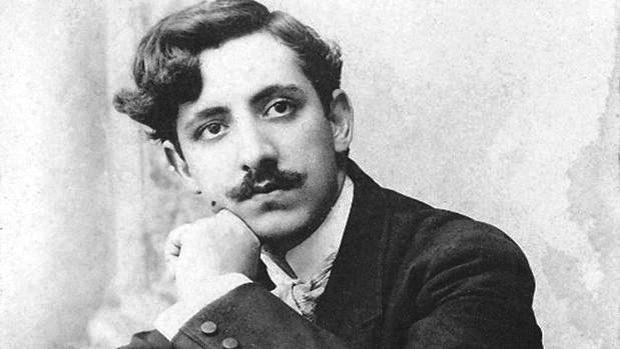
A singular name within Cuban letters is that of Alfonso Hernández Catá, storyteller, poet, playwright and diplomat, author of universal resonances, of whom little is spoken and of whom so much we could say. A few brief notes in the Dictionary of Cuban Literature, from the Institute of Literature and Linguistics of the Academy of Sciences of Cuba, offer us these details: born in Aldeadávila de la Ribera, Spain, on 24th June 1885, and deceased on 8th November 1940, in Rio de Janeiro.
The note highlights that he lived until the age of 14 in Santiago de Cuba – of which he always felt himself a son – and that afterwards he moved to Spain, where he lived a Bohemian life. In 1905, he returns to Cuba and establishes himself in Havana, and here he works as a reader in a cigar factory and publishes his works in important newspapers. Later he will enrol in a diplomatic career (in France) and will be, afterwards, consul in various countries; chargé d’affaires in the Cuban legation in Lisbon and minister in several Latin American nations. A reference to some of his works and the fact that titles of his were translated into several languages puts an end to the dictionary entry.
Neither his solvent economic possibilities nor his stay in other lands, where he studied and assumed important posts, distanced him from the anti-colonial feelings apprehended in his very Cuban home.
Attentive to the cultural environment of the Island, and linked to its intellectual vanguard, his close friends were, among others, Emilio Roig de Leuchsenring, Rubén Martínez Villena and Juan Marinello. A fervent anti-Machado activist, he wrote the book of stories A Cemetery in the Antilles, of absolute denunciation of the tyrant. The title saw the light after having resigned from his post in the Cuban legation, precisely due to his disagreement with the dictatorship.
Author of more than ten novels, about 14 theatre works, and several books of stories, Hernández Catá was a great admirer of José Martí. He wrote the newspaper article The Shadow of Martí, in which he delved into his poetry; he published Mitología de Martí, an original book that collects tales «through which the image of the Apostle becomes the tutelary guide of the nation’s future. In this volume appears Don Cayetano el informal, published in 1926, one of the most anthologised texts of the author, where the concern of Hernández Catá and his denunciation of the imperialist greed for Cuba’s natural resources is reiterated».
He who refers to it thus is the academic and university professor Rogelio Rodríguez Coronel, in a lecture called Alfonso Hernández Catá, a forgotten one? (for him he is not, but rather at present, he says, he has been little and poorly read). In it he shares interesting notes concerning the writer and considers, regarding Mitología…, that it would be well worth rescuing the volume «thinking above all of the young Cuban reader of today, as its didacticism and narrative quality provide a seductive reading experience».
There were those who, with all bad intention, sought in vain to tarnish his work, pointing out to him an absence of Cubanism, a Cubanism which, to use his words, some believed to find in «that varnish visible at first glance (…) that little reveals of the inner substance».
Juan Marinello, in allusion to his story-writing, went so far as to say that in more than one of his stories – many would become, he wrote, classics of our letters – «was the desire to give the genre the perfect stature that resists the unmerciful bites of time and the unleashed petty passions of ‘literary envy’».
With the mastery that characterises him, Rodríguez Coronel – who in the cited work collected in the book Forgotten Writers of the Republic, from Ediciones Unión, pauses on more than one of Hernández Catá’s titles – praises the story Los chinos and qualifies it as one of the best of Cuban narrative.
In Rio de Janeiro, 85 years ago, an aviation accident put an end to his life. His friends, the Chilean poet Gabriela Mistral and the Austrian writer Stefan Zweig, exiled in Brazil, pronounced beautiful words to render tribute to the Cuban, in a session organised by the Brazilian Commission of Intellectual Cooperation and the Brazilian-Cuban Institute of Culture.
«He could not live if not in the midst of great human cordiality, and wherever he found himself, he created around him a clean and beneficent atmosphere,» said of him the author of Beware of Pity.
For her part, Mistral considered, among a long rosary of praises, that «the joy that the dealings with Alfonso Hernández Catá gave to his friends came, for me, from two things: from the great humanity that emanated from his faculties, humanity of an Iberian and of an Antillean, and it came from the seduction of his conversation (…). There was in it a kind of voluptuousness of the talker, with the language of which he was at once servant and master, worker and lord».