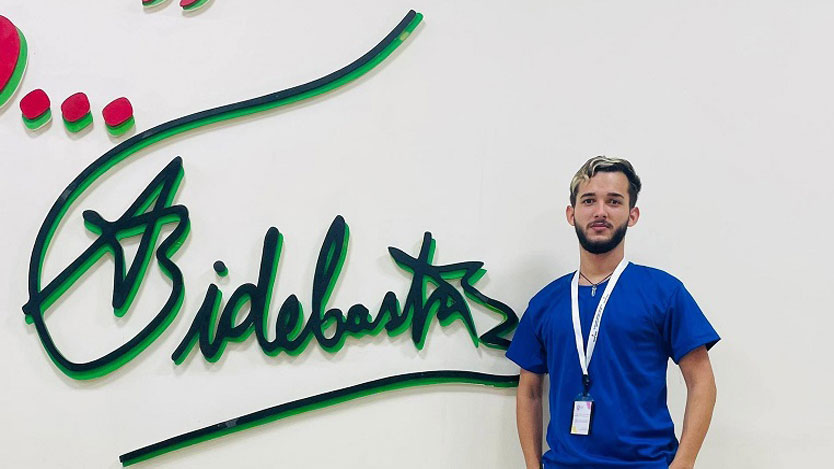
The future of Cuban science is being sown today from the university classroom. This is how Kevin Marcos Delgado Álvarez, a Law graduate and professor at UNICA, understands it; for him, the Network of Young Researchers of the Ministry of Higher Education (MES) represents a turning point.
Everything had begun after the CITMA 2024 awards, he recalled. At that moment, a group of young people met with the minister and in that dialogue the idea germinated: it was necessary to formally group together all those professors and students who were already doing science on university grounds. It could not be a diffuse group; it had to be a network with clear objectives and specific results within the Ministry itself.
The purpose was as ambitious as it was inspiring: to enhance young scientific talent, that which resides in professors under 35 and in undergraduate and postgraduate students. The goal was to continue doing young science, but with greater coordination and projection.
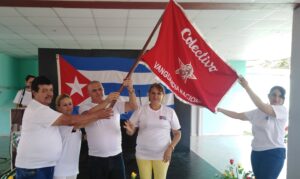
The third national meeting, held between 24 and 28 November at UNICA, was tangible proof of this growth. Representatives from several institutions of higher learning arrived there, mainly from the central region of the country, from Matanzas to Camagüey, along with colleagues from the Enrique José Varona University of Pedagogical Sciences and the University of Oriente.
Those days were of intense work and exchange. They were not limited to theoretical discussions; the agenda included visits to Science, Technology and Innovation entities in the Avilanian territory. It was crucial to see the practical application, the link with the productive sector. And, in parallel, they dedicated themselves to analysing how to continue perfecting the network’s work within the Cuban university ecosystem. How to be more effective? How to generate greater impact?
The path ahead, Kevin pointed out, is perfectly delineated. The network has the projection of extending to all Higher Education centres in the country, integrating an increasingly larger critical mass of young scientists. The accumulated talent and will would be formidable.
And behind this effort of organisation and growth beats a greater commitment: to work from science and innovation to contribute solutions to the complex problems facing Cuba today. It was not just about researching for the sake of researching, he concluded, but about putting university knowledge at the direct service of the nation’s development.