Our Apostle José Martí Pérez, when referring to martyrs, wrote in the Revista Universal, in Mexico, on 11 May 1875: «(…) martyrs do not die except so that new martyrs may begin to be born (…)» It was a single shot. Raúl Cervantes turned pale and immediately collapsed in all his burliness.
Three days later, on 10 December 1955, he would die at 10:00 am, after two surgeries and 22 blood transfusions. His funeral would become one of the largest in Avilanian history and would provoke protests and denunciations of various kinds in other parts of the country.
Thus was born the first Avilanian Fidelista martyr, the first in the entire territory of the present-day province of Ciego de Ávila, then the Camagüeyan municipalities of Ciego de Ávila and Morón. In 1953, according to the population census data of that year, the city of Ciego de Ávila had 35,178 inhabitants.
The leader of the Revolution himself, Fidel Castro Ruz, from his exile in Mexico, would write in the pages of the magazine Bohemia, in its edition of 11 March 1956, in the article titled «The Condemnation Asked of Us»: «(…) Raúl Cervantes, responsible for finances of the Movement in the city of Ciego de Ávila, who before expiring did me the great honour of sending me his pen through his family and a message expressing that he was gladly going to join the fallen comrades, because he had absolute faith in the definitive triumph of our ideals.»
FROM A MAMBÍ AND HUMBLE FAMILY
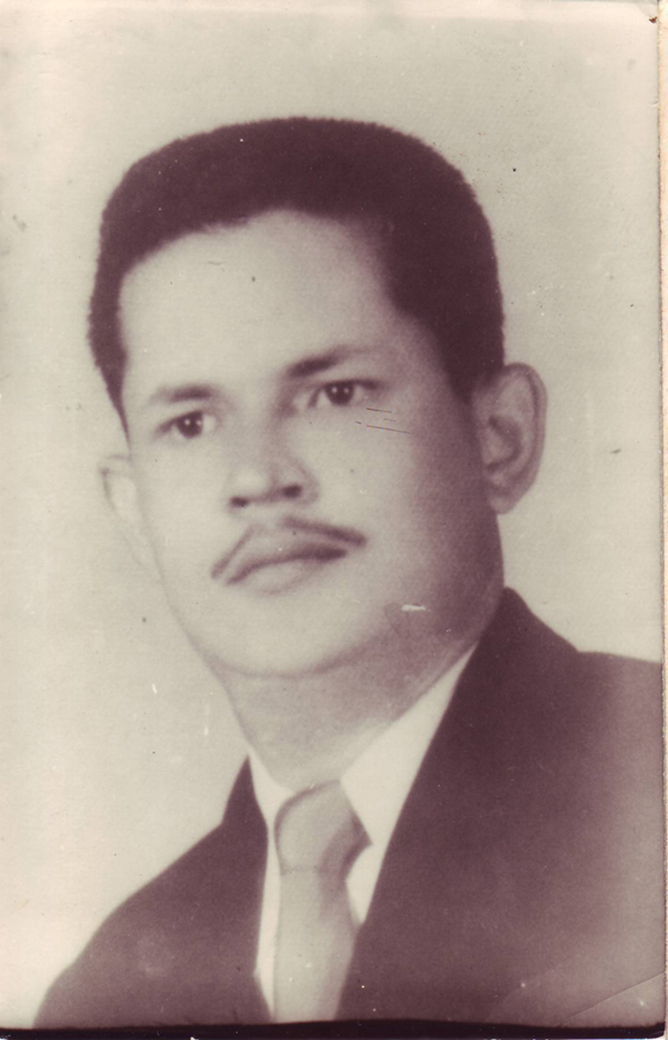
Who was Raúl Jerónimo Cervantes Cervantes? Why did he die? What was the significance of his death? Raúl was a young man of mixed race, of very humble origins. There were seven siblings. From childhood he had to start working, even as a school caretaker, in order to study there. His studies were intermittent. He could not achieve his desire, which was to enter the Instituto de Segunda Enseñanza of Ciego de Ávila (ICA). He barely managed to begin studies at the night-time Escuela de Comercio.
In the family home, patriotic formation was very strong, based on the closest relatives: his mother, Carlota Modesta Cervantes, Carlita, worked in the pro-independence prefectures as a child. Raúl’s paternal grandfather, Lieutenant Colonel José Amador Cervantes Miquelín, participated in all three wars of independence; while his father, José Pablo Cervantes Madrigal, ended the 1895 struggle with the rank of captain.
He made his living as a barber, a trade he learned with his brother José Irene. The manual clippers he used for cutting hair are preserved in the Coronel Simón Reyes Hernández Provincial History Museum, in the City of Portals.
As a young man—according to his friend René Salas’s recollection—he liked parties, music and playing baseball. He was good-looking and very well-liked by the young women at parties. His closest relatives and friends called him Querer. He had been a member, since July 1953, of the youth masonic lodge: Asociación de Jóvenes Esperanza de la Fraternidad (AJEF).
Authors: Ángel E. Cabrera Sánchez/Mayda Pérez García/Luis Raúl Vázquez Muñoz/