The Ministry of Public Health is making huge efforts to guarantee vital services to the population, amidst a brutal economic war.
More than 32,880 pregnant women will face additional risks, threats and limitations as a consequence of the United States government’s energy blockade against Cuba, whilst other vital services for newborn patients, minors, diabetics, those undergoing oncology treatments or in need of surgical interventions or emergencies are also seriously affected as the days go by.
This has been revealed by the Cuban Ministry of Public Health which, since the serious juncture of the covid-19 pandemic, has been making huge efforts to alleviate the multiple challenges in guaranteeing vital services to the population, amidst a brutal economic war that directly impacts people’s lives.
The fuel deficit generates disruptions in the prioritised care of Maternal and Child Health, with limitations that include difficulties in pregnant women’s access to obstetric ultrasounds for monitoring fetal wellbeing and genetic scans for the timely diagnosis of malformations.
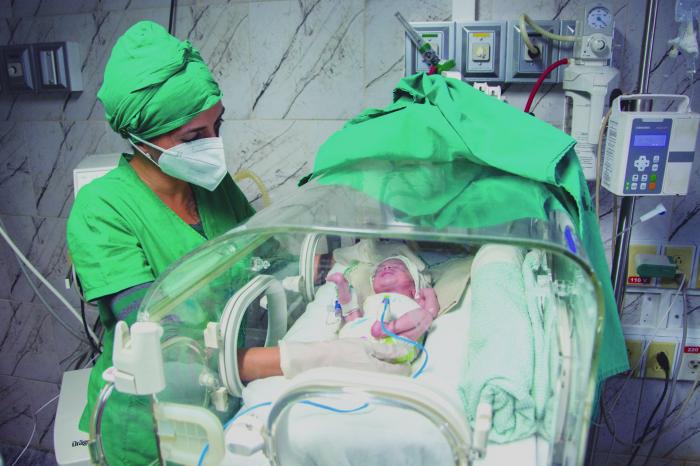
Likewise, it causes limitations for the mobilisation of commissions attending to extremely severe maternal morbidity and critical neonates, delays in the childhood vaccination schedule, puts at risk the lives of children with special needs (home ventilation, mechanical aspiration and temperature control), among other problems, such as the very scarce availability of medical transport for attending to urgent and emergency cases.
These disruptions could have a significant impact on the more than 61,830 infants under one year of age who require special care in that first stage of life.
Furthermore, it limits attention to medical emergencies, to cancer patients and the monitoring of programmes for chronic non-communicable and communicable diseases, which directly causes an increase in mortality in the country.
The new arbitrary measures against the Cuban people will continue to increase the difficulties in obtaining medicines, supplies, reagents, consumables, medical instruments, as well as the purchase of equipment and spare parts, or will, in some way, affect the full functioning of hospitals, special wards, operating theatres and intensive care units.
In this regard, the reduction in the frequency of commercial flights and the increase in freight costs hinder access to medicines and other essential resources for the Health System, including those transported as emergencies.
Faced with the challenges described and many others, which we will expand upon in future comments, Cuban health personnel and institutions strive day and night to ensure our people receive the medical care and human support they have always provided, a non-negotiable achievement, however difficult the circumstances caused by the intensification of the economic war, which resorts to the crime of depriving a country of fuel and putting millions of lives at risk.