Following an exhaustive capital repair process, the General Teaching Hospital Antonio Luaces Iraola, in the province of Ciego de Ávila, has brought its renovated surgical unit for major elective surgery into operation.
The project, representing a significant investment for the Health System in the region, will optimise surgical services and benefit the population of the central-southern part of the province.
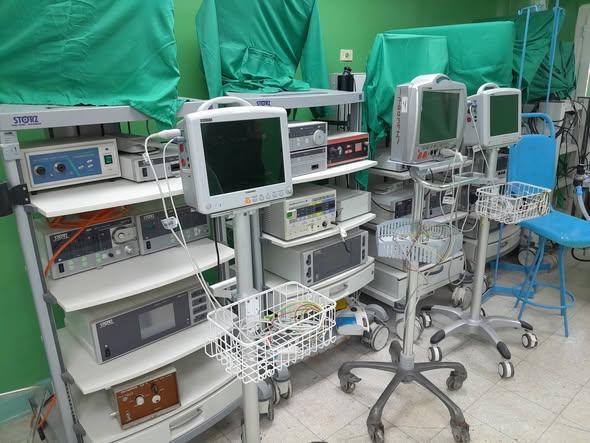
The unit comprises six modern operating theatres, designed to meet the highest standards of asepsis and medical technology. Each operating room is equipped with state-of-the-art furniture and technology, or equipment recovered by the Provincial Centre for Electromedicine, which salvaged part of the apparatus. This includes surgical tables, ceiling-mounted operating lights, and monitoring and anaesthesia systems, guaranteeing optimal conditions for performing complex, high-quality procedures.
Dr Roberto Rodríguez Cruz, Deputy Director of Medical Care at Luaces Iraola, stated that the main objective of this commissioning is to contribute significantly to reducing the surgical waiting list affecting the municipalities in the central-southern part of the Avilanian province.
With these six theatres, which began operating with surgical interventions related to the Maternal and Child Health Programme (PAMI), it is expected to increase the volume of scheduled operations, thereby reducing waiting times for patients requiring more complex surgical interventions.
Dr Rodríguez Cruz highlighted that the capital repair not only involved structural improvements (floors, ceilings, calibration of ventilators, air conditioning systems, and medical gas networks), but also the training of medical and nursing staff in the handling of the new equipment.
«This is a step forward in our aim to provide faster, safer, and higher quality care for our people. The new unit will allow us to make better use of the human and material resources we possess.»
In addition to the six operating theatres, the unit has post-anaesthesia recovery areas, specialised nursing stations, and central sterilisation rooms, which streamlines workflow and reduces the risk of healthcare-associated infections.
The province of Ciego de Ávila, and particularly its central-southern portion (which includes the provincial capital and surrounding areas), concentrates a high number of patients requiring scheduled surgeries.
With the reopening of this unit, the territory’s service network is strengthened, and procedures that were sometimes referred to other provinces are decentralised.
It is expected that in the coming weeks, the surgical schedule will be progressively reactivated, prioritising the most complex cases and those patients who have been waiting the longest.
Health authorities have called on the population to maintain confidence in the System and to attend their follow-up appointments to update their pre-surgical assessments.