The Agricultural system in the province of Ciego de Ávila, faced with the deficit of fuel and electricity, seeks alternatives to sustain food production and distribution through a multifactorial strategy that promotes the use of renewable energy sources, rationalisation and efficient use of resources.
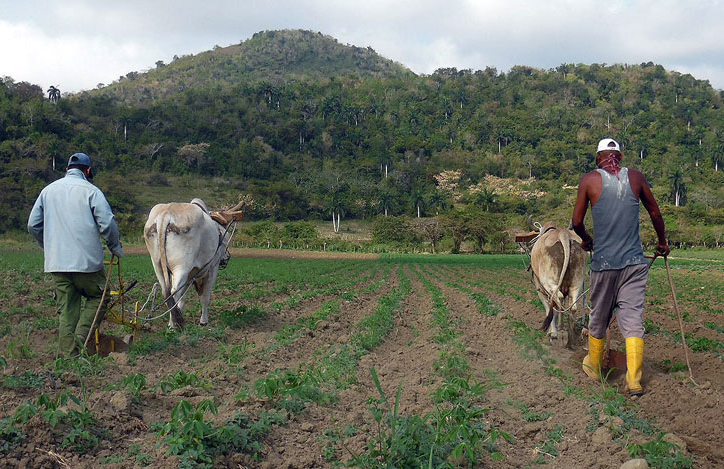
Ulises Pérez Correa, head of the Agricultural Engineering Department at the Provincial Delegation of Agriculture, specified to Invasor digital that among the alternatives for this situation, animal traction will be promoted, for which 1,701 oxen teams are currently counted, with the aim of reaching 3,067 by the end of this year.
Jorge Luis López Domínguez, Machinery Specialist from the same delegation, noted that the majority of the teams belong to the private sector, so the greater challenge falls to state enterprises, not accustomed to carrying out tasks without motorised equipment.
Data from last January shows that land preparation with animal traction covered 330.5 hectares (ha), 1,396.6 ha were planted and cultivated, although all land preparation tasks cannot be undertaken with oxen, and 936 tonnes of goods, inputs and seeds were transported.
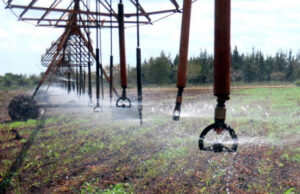
Osmar Tejeda Fajardo, Irrigation and Drainage Specialist, commented to the local press that work is being done on the gradual recovery of the windmill and pumping station fleet, given that currently only 28 per cent of the total 252 existing in the Avilanian province remain active.
Other organisational measures include the grouping of harvests on Tuesdays and Thursdays to maximise lorry load capacity, on-site weighing of food, and the concentration of products at common points when several producers are involved.
Luis Rubén Dorta Fadraga, head of the Livestock Department at the Provincial Delegation of Agriculture, explained that the distribution mechanisms for cow’s milk have been readjusted through a cross-supply system that prioritises producers located within the operational radius of their respective territories, tasked with supplying the nearest bodegas.
The specialist specified that in the municipalities of Ciego de Ávila and Morón, with greater complexity and population density, local production does not meet distribution policy nor total demand, so strategies were designed to manage to supply children, the elderly, pregnant women and persons on specialised diets.
He added that the surpluses from Chambas and Bolivia, municipalities with the highest collection volume, will be destined for those territories after guaranteeing local consumption; in such cases, the milk will be processed in the provincial dairy industry with prior authorisation from the Animal Health and Hygiene and Epidemiology departments.
Olga Lidia Mariño Valdivia, Deputy Delegate for Livestock in the province, reported that where transport becomes impossible and there are people in vulnerable situations, cheese will be made to meet specific demands for social consumption in maternity homes, homes for the elderly and daycare centres.
Among the measures adopted is also the transfer of animals towards areas with natural water sources or electricity generation back-up via renewable energy, as well as the mobilisation of livestock to suitable locations to avoid mortality, always adhering to epizootiological regulations.
Regarding meat production, Dorta Fadraga indicated that the sanitary slaughter slabs with a licence for large livestock slaughter were considered in all municipalities, except Ciro Redondo.
Surpluses generated from these slaughters of bovines, initially destined for prioritised diets, will be distributed by each territory according to its needs.